


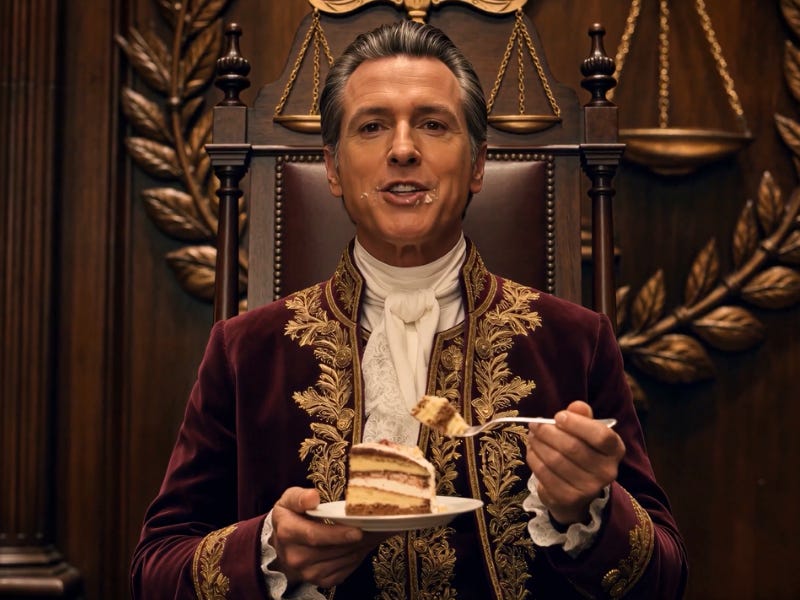
I must confess that I didn’t pay a whole lot of attention to the Los Angeles mayoral primary race. I know that social media, cable news, and TMZ were all very excited about it (in large part because of the waves made by former reality-TV star, Spencer Pratt), but as a Coloradan who never thought for a second that a Republican stood a chance of winning over one of the bluest districts in the country, I just couldn’t bring myself to care all that much.
What did kind of pique my interest, however, was the Pratt campaign’s heavy reliance on artificial-intelligence videos, which were hailed as strokes of genius by political analysts and politicians alike. To be clear, most of the videos were created by individuals or organizations outside of the campaign, but Team Pratt shared them on their social media accounts, and it didn’t take long for a number of them to go viral.
At least one depicted Los Angeles as a literal Hell on Earth, on fire and overtaken by druggies and homeless people — much to the delight of local Democratic politicians including Gavin Newsom, Kamala Harris, and Pratt’s primary opponent, incumbent mayor Karen Bass. Each was portrayed as a sinister super-villain, with Pratt himself donning a Batman getup, and boldly descending on the scene to save the day (while cheered on by the likes of Joe Rogan and Marco Rubio).
The videos generated millions of views, and got Pratt (and his campaign) more attention than he otherwise would have received. Since they were created with AI, they were relatively inexpensive to make, and the satire assuredly channeled real-life frustrations of lots of people in L.A.
Though Pratt lost the primary (as expected), he did outperform his polling, and it’s hard to argue that the videos weren’t one of the reasons. I expect AI videos and other imagery to play a much more significant role in our politics going forward.
But I must say that the videos made me a little queasy. I found it unsettling watching real people — elected public officials — realistically animated, without their consent, into saying and doing degrading things they haven’t actually said or done.
I felt the same way when I saw this AI video on social-media a couple months ago, satirizing an instance of President Trump drifting off during an Oval Office meeting:
Now, to be clear, when I say “realistically,” I’m not suggesting that anyone watching these particular videos were fooled into believing they’re authentic. They’re obviously way too over-the-top for that, as are the ones you’ve all assuredly seen online from outside of the political world, like Hollywood celebrities sitting down besides their younger selves, or appearing in classic film or television scenes they were never in.
I don’t really like those either, but I don’t find them as unnerving as with elected officials who make consequential public decisions on behalf of up to millions of people in this country. Entertainment value is one thing, but in an era already overflowing with misinformation, conspiracy theories, and alternative realities, I shudder to think of how much worse cheap, easy-to-use AI technology could make our politics.
I worry about the ramifications of shady campaign arms and other bad actors (including from outside the country) almost effortlessly producing and widely distributing increasingly convincing footage, on a wide scale, that further distorts and degrades Americans’ understanding of how they’re being led, and the decisions those leaders are making.
It doesn’t help that very few of our leaders seem to have an adequate grasp, themselves, of the rapid growth of AI and its future implications. Heck, I come from an I.T. background, I’ve read a lot about AI, and I’ve personally talked at length with notable AI researchers… and I still feel very far behind the curve on this issue (as I’m sure most people do).
As with other game-changing technologies, AI is destined to become massively integrated with our society — to an extent most people can’t even envision yet. In the grand scheme of things, political influence may well end up being one of the more trivial hurdles (I personally worry more about AI’s effect on the workforce and national security).
But as a close political observer who’s already seen and lamented the immense damage this post-truth era has caused to our institutions and citizens’ understanding of government, I’m unfortunately not convinced AI won’t make the situation even worse.
I’d like to invite you all to Reagan Caucus Action’s new Substack. I co-host their weekly podcast, on which we feature a different guest every week to discuss numerous issues from a Reaganite perspective.
It’s totally free, and you can sign up here (I hope you do):

Maybe in the future we'll be voting for AI politicians.
You said that you didn't pay much attention to this race, now you arrogantly tell me that I'm wrong (about the voting) and you're right! (classic liberal move)... Spencer Pratt is awesome (an All American asskicker) - it's very difficult to believe that there are more morons in LA than clear thinking, common sense, voters