


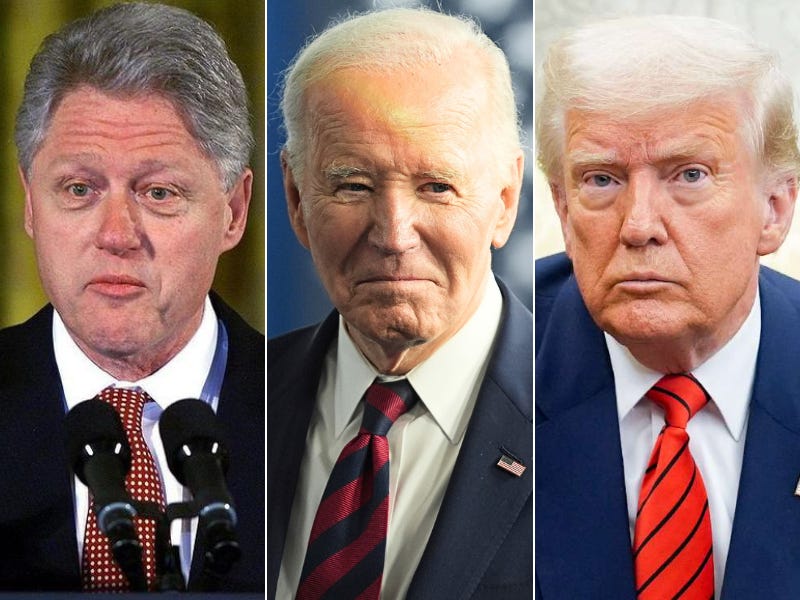
There are all sorts of checks and balances baked into the Constitution. But one power sits above the law, untouched by Congress, immune to the courts and utterly unaccountable: the presidential pardon. It is the kind of absolute authority you’d expect in a monarchy, not a democracy.
The Founding Fathers thought they were building a system of justice with a human touch — where a president, guided by conscience and compassion, could offer mercy to someone wrongfully convicted or genuinely reformed. The pardon was supposed to heal wounds, not reward political allies or well-heeled donors.
Nice idea. Too bad it hasn’t always worked out that way.
Gerald Ford pardoned Richard Nixon after Watergate to help the country move on. It was controversial, sure, but Ford was acting on principle, not personal gain.
Contrast that with Bill Clinton, who — on his way out the door — pardoned Marc Rich, a fugitive tax cheat whose ex-wife just happened to be a generous Clinton donor. That wasn’t mercy. That was transactional politics.
Joe Biden used his final hours in office to pardon his son, Hunter, and other family members — along with a few preemptive pardons aimed at blunting potential charges from a future Trump administration. That’s not justice. That’s insurance.
And then there’s Donald Trump. Where to begin?
